Is It Worth Remodeling a Kitchen Before Selling Your Home?
Usually, a targeted kitchen update is worth it before selling, but a full remodel rarely is. Buyers in Fayetteville respond to a kitchen that looks clean, current and working. Fresh paint, new hardware, better lighting and repaired fixtures deliver that for far less money and time than a gut job. Save the big remodel for kitchens with damage or failing systems buyers will flag.
Key Takeaways
- A targeted update usually beats a full remodel when you plan to sell your home soon.
- Buyers judge a kitchen’s condition first: clean surfaces, working appliances, good light and undamaged floors.
- Cabinets, countertops and appliances drive most kitchen costs, with labor and older-home rules adding more.
When does a pre-sale kitchen update make sense, and when doesn’t it?
A pre-sale update makes sense when something is broken, stained, damaged or dated enough that buyers will price a remodel into their offer. It usually doesn’t make sense when the kitchen works and looks decent, because a full remodel means paying for finishes the next owner didn’t pick.
We ask sellers three questions before we price anything:
- Will a buyer’s inspector flag it? Leaks, soft subfloor, faulty wiring and failed appliances belong on the fix list.
- Does it photograph badly? Dark cabinets, yellowed counters and worn floors hurt listing photos, and photos are where buyers meet your home first.
- Can you get the money back? Our guide to home renovation ROI walks through how to weigh what a project costs against what it may return.
If the honest answer to all three is no, put your money into cleaning, decluttering and small repairs. If one is yes, a targeted update is usually a better bet than living with the problem or starting over.
What do buyers notice first when they walk into your kitchen?
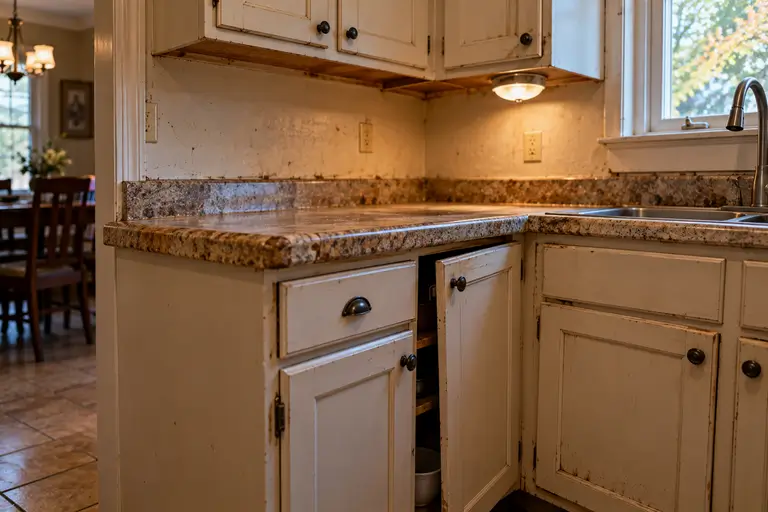
Buyers notice condition before style. They look for clean surfaces, cabinet doors that close straight, working appliances, good light and a floor without damage. Style comes second, and mostly as a clue to how well the rest of the house has been kept.
Here’s what we see buyers react to most on a walkthrough:
- Grimy grout, stained sinks and worn countertop edges
- Sagging, peeling or mismatched cabinet doors
- Dim or dated light fixtures
- Appliances that don’t match or don’t work
- Water damage under the sink or around the dishwasher
Electrical details matter too, because a buyer’s inspector will test outlets. The NFPA’s summary of kitchen changes in the 2020 National Electrical Code explains the expanded GFCI and AFCI protection requirements for kitchens. Missing protection can end up on an inspection report and become a negotiating point.
Should you choose a refresh, partial update or full remodel?
Most sellers do best with a refresh or a partial update. A full remodel fits only when the layout doesn’t work, cabinets are failing or systems need replacing anyway. The goal is removing reasons for a buyer to discount your price, not building your dream kitchen for someone else.
| Option | What it usually includes | Best when | Main trade-off |
|---|---|---|---|
| Refresh | Paint, hardware, lighting, faucet, deep clean | Kitchen is sound but tired | Won’t hide damaged cabinets or counters |
| Partial update | New countertops, cabinet refacing or painting, appliances, flooring | One or two elements look dated | Costs more and takes longer to schedule |
| Full remodel | New layout, cabinets, plumbing and electrical work | Layout or systems are failing | Highest cost and longest timeline before listing |
If you’re leaning toward more than a refresh, our kitchen remodel steps guide shows what a bigger project involves. You can also see the scope of our kitchen remodeling services.

What drives the cost of updating a kitchen before you list?
Cabinets, countertops and appliances are usually the three most expensive items in a kitchen remodel, with labor adding to each. Every kitchen is different, so here’s what really moves the price.
- Scope: Swapping hardware costs far less than replacing cabinet boxes.
- Materials: The BLS Producer Price Index tracks changes in the prices businesses pay for construction materials and inputs, and those shifts show up in your quote.
- Hidden conditions: Rot, old wiring or plumbing problems found after demolition add work.
- Home age: The EPA’s Lead Renovation, Repair and Painting Program requires contractors working on homes built before 1978 to be lead-safe certified and follow lead-safe work practices.
Across Fayetteville, Peachtree City, Newnan, McDonough and the rest of the south metro area we serve, the build year is one of the first things we ask about. It shapes how the work gets done. Our kitchen remodeling cost factors guide covers these drivers in more depth.
How do you fit kitchen work into your selling timeline?
Plan backward from your list date. A refresh can often finish quickly. Partial updates depend on countertop fabrication and product availability, and a full remodel can run long enough to push your listing back. Leave time for final cleaning and listing photos after the crew leaves.
Crew availability matters as well. The NAHB Remodeling Market Index tracks remodeler sentiment and current market activity. When demand is strong, start dates can move further out, so book early. Our guide to how long a home remodel takes in Georgia helps you judge whether a project can finish before you list.
Build in time to air the house out, too. The EPA’s page on remodeling and indoor air quality notes that remodeling can release dust, chemicals and other pollutants. You don’t want fresh finish smells greeting buyers at your first showing.
How should you choose a contractor for a pre-sale kitchen project?
Choose a remodeler who gives you a written estimate, shows proof of licensing and insurance, and doesn’t ask for a large payment up front. Those are the core protections the FTC’s advice on avoiding home improvement scams recommends for any homeowner.
Before you sign, check that:
- The estimate lists scope, materials and schedule in writing
- The contractor pulls any permits your project needs
- They know lead-safe rules if your home is older
- They can meet your list date, not just start soon
Know your rights as well. The FTC’s Cooling-Off Rule gives consumers the right to cancel certain contracts, including some home improvement contracts, within three business days. For more on vetting remodelers south of Atlanta, read our guide to choosing a home remodeling contractor.
When you’re ready to talk through what your kitchen needs before listing, call Josh and Raymond at 678-835-9601.
Frequently Asked Questions
What is the common rule of thumb for renovations?
It’s an informal rule of thumb that some homeowners use to cap renovation spending at a share of their home’s value. It doesn’t come from any code body or government agency, and versions differ. Treat it as a gut check, then compare your actual project against nearby home sales.
What renovations add the most to resell?
Updates buyers see right away tend to help most before a sale. That means paint, lighting, hardware, flooring repairs and a clean, working kitchen. Large custom projects are harder to recover when you’re moving soon, because buyers weigh condition more than your personal taste in finishes.
What not to fix before selling a house?
Skip layout changes, luxury upgrades and minor wear buyers expect in a lived-in home. Also skip anything a new owner will likely replace to suit their own taste. Do fix safety issues, leaks and failing systems, because those tend to show up on inspection reports.
Sources
- Lead Renovation, Repair and Painting Program, U.S. Environmental Protection Agency, retrieved 2026-09-26
- Remodeling Your Home and Indoor Air Quality, U.S. Environmental Protection Agency, retrieved 2026-09-26
- NAHB Remodeling Market Index (RMI), National Association of Home Builders, retrieved 2026-09-26
- Producer Price Index, U.S. Bureau of Labor Statistics, retrieved 2026-09-26
- How To Avoid a Home Improvement Scam, Federal Trade Commission, retrieved 2026-09-26
- Buyer’s Remorse: The FTC’s Cooling-Off Rule May Help, Federal Trade Commission, retrieved 2026-09-26
- Key Kitchen Changes in the 2020 NEC, National Fire Protection Association, retrieved 2026-09-26