How Do You Size Replacement Window Glass?
To size replacement window glass, first confirm you’re replacing only the glass, not the sash or the whole window. Remove the glazing stops, then measure the glass itself for width, height and thickness. Take width and height in several spots and keep the smallest reading. Allow a small clearance so the pane isn’t forced in, and treat double-pane units as sealed assemblies with their own overall thickness.
Key Takeaways
- Figure out whether you need a single pane, an insulated glass unit, a sash or a whole window.
- Measure the glass itself, not the visible opening, after the glazing beads or stops come off.
- Fog between panes means a failed seal, and spreading failures can signal the window itself is due.
Pane, sash or whole window: what are you replacing?
Cracked or fogged glass calls for one of four fixes: a single pane, a sealed insulated glass unit (IGU), a new sash, or a whole new window. Glass sizing only applies to the first two. If the frame is rotted or the sash won’t stay up, new glass won’t solve it.
Look at the edge of the glass. One sheet means single glazing. Two sheets separated by a spacer strip, often with fog trapped between them, is an IGU, and it gets ordered as one piece. If the sill or frame is soft, use our guide to measuring a window for replacement instead, because that job is measured at the frame or rough opening.
| What you’re replacing | What you measure | Typical signs |
|---|---|---|
| Single pane | Glass width, height, thickness | Crack in one sheet of single glazing |
| Insulated glass unit | Width, height, overall unit thickness | Fog between panes, crack in one layer |
| Sash | Sash size and fit in the frame | Rotted rails, won’t stay up or lock |
| Whole window | Existing frame or rough opening | Rotted sill, drafts, frame out of square |
How do you get past the stops and glazing beads to the glass?
Remove the glazing beads or stops, the thin strips that hold the pane in the sash. Wakefield Equipment’s explainer on glazing beads notes these strips must come off before the glass can be reached and replaced. On vinyl windows they often snap out; wood sashes may use nailed stops or glazing putty.
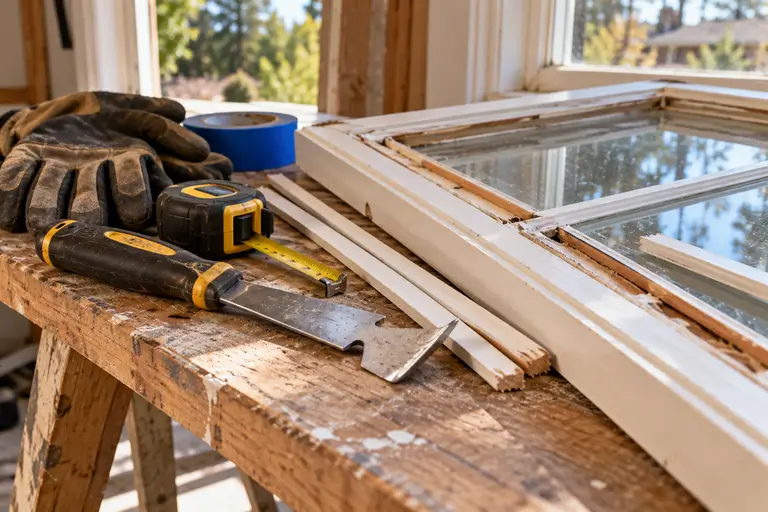
A glazing bead is defined in Thermal Windows’ glossary entry on glazing beads as the molding or strip that secures glass in a sash. The narrow strip framing the glass is your starting point. Have these ready:
- A stiff putty knife or bead removal tool
- A tape measure that reads fine fractions
- Heavy gloves and safety glasses
- Painter’s tape to label each bead’s position
- A notepad for every reading
If the glass is shattered, have a pro handle it rather than working around sharp edges.
How do you measure the width, height and thickness of the glass?
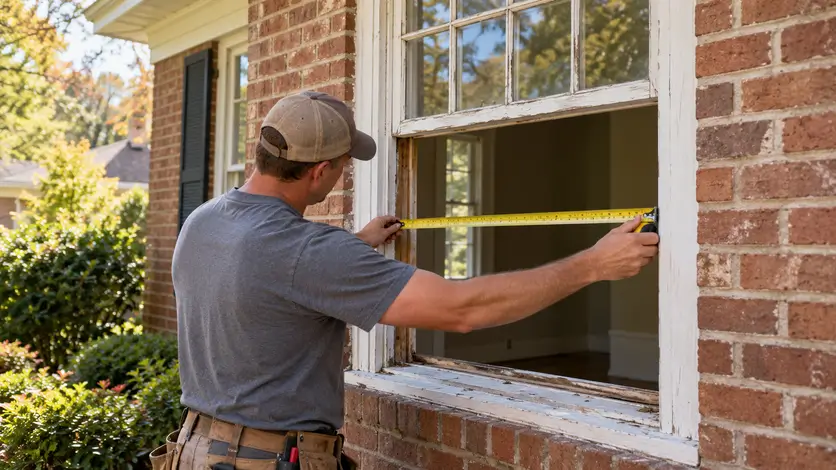
Measure the glass edge to edge, not the daylight opening you see with the beads in place. The pane’s edges sit hidden inside the sash, so the visible glass is always smaller than the real size. With the beads off:
- Measure width across the top, middle and bottom.
- Measure height at the left, center and right.
- Record the smallest width and the smallest height, since sashes are rarely perfectly square.
- Measure thickness at the edge: the single sheet, or the full unit from outer face to inner face on an IGU.
- Check a corner for an etched mark showing tempered safety glass, and replace like with like.
The common mistakes are measuring with the beads still in, rounding up, and swapping width and height. List width first on any order. Tempered glass can’t be cut down afterward, so a wrong size means a new order.
Why should the new pane be slightly smaller than the opening?
A new pane needs a small gap around its edges so it sits in the sash without pressure. Glass and frames expand and contract with temperature, and frame materials move at different rates. A pane jammed tight can crack at the edge or bow the sash.
If you measured the old glass itself, that size already reflects the original clearance. If the glass is gone and you measured the opening in the sash, tell the glass shop or manufacturer exactly that and let them apply their own deduction for your frame and glazing system. Trimming the number yourself and then having the shop trim it again is how a pane ends up rattling or failing to seal against the bead.
How do you size double-pane insulated units and other tricky glass?
Double-pane units are harder because you’re ordering a sealed assembly, not a sheet of glass. Width and height are measured the same way, but overall thickness must fit the sash channel, and the unit’s makeup has to match. Capture:
- Overall unit thickness at the edge
- Any printing on the spacer bar noting coatings, gas fill or tempering
- Grids between the panes and their pattern
- Obscure privacy glass, common in bathrooms
Laminated glass and arched or shaped tops add another layer, often needing a template. When an older window’s sealed unit has failed and the sash is tired too, a full window replacement often makes more sense than chasing a custom IGU.
What drives the cost of a new pane versus a new window?
Here’s what moves the price. A single pane usually costs less than a sealed IGU, and a glass swap usually costs less than a new window. The gap narrows when:
- The job needs tempered, laminated or obscure glass
- The IGU has low-E coatings, gas fill or grids
- The size is large or the shape is custom
- The sash needs repair
- The home was built before 1978, where federal lead-safe work rules cover window work
A new window adds removal, flashing, trim and disposal, and insert versus full-frame replacement changes the labor. For the local picture, see our window replacement cost guide for Fayetteville.
When does a failed pane mean it’s time for new windows?
A failed pane points to new windows when it’s one problem among several. One fogged unit is a glass repair. Seal failures spreading across the house, along with drafts, soft sills or sashes that won’t stay up, suggest the windows themselves are wearing out.
ENERGY STAR’s guidance on high performing windows and storm windows helps homeowners weigh repairing, adding a storm window or replacing based on energy performance. Our checklist of signs you need new windows when repairs aren’t enough walks through the checks. If water shows up around the frame, read our guide to what causes leaking windows and how to fix them.
We’re Josh and Raymond Daniels, and we work with homeowners and property managers in Fayetteville, Peachtree City, Newnan, Jonesboro, McDonough, Stockbridge and Reynoldstown. If you’re unsure whether it’s the glass or the window, call us at 678-835-9601 or start with our Fayetteville window replacement service.
Sources
- What Are Glazing Beads and Why do They Matter? – wakefieldequipment.com, retrieved 2026-09-26
- Glazing bead – thermalwindows.com, retrieved 2026-09-26
- High Performing Windows or Storm Windows | ENERGY STAR – energystar.gov, retrieved 2026-09-26